
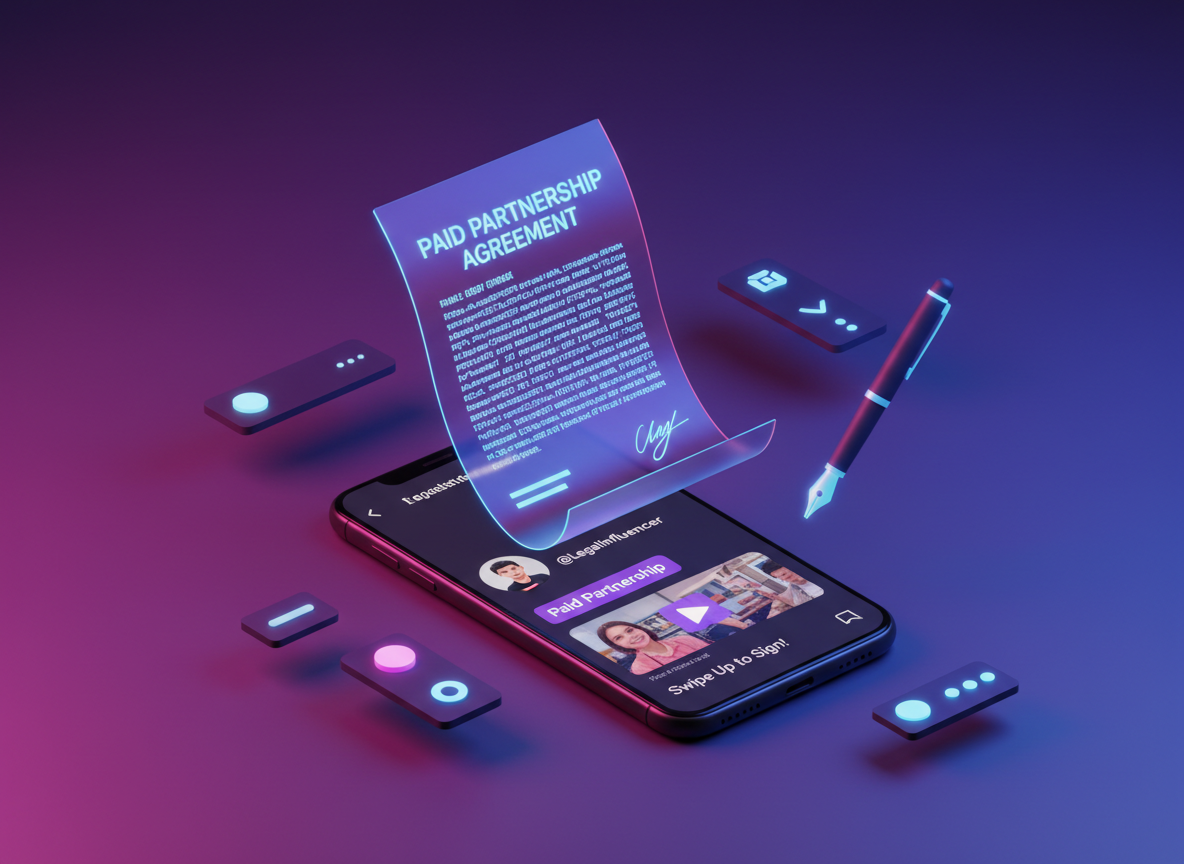
Professionalizing your presence on TikTok involves moving beyond creative execution and into the realm of legal liability. Every brand deal, affiliate link, or gifted product carries a set of regulatory obligations and contractual risks that can jeopardize your career if ignored. Regulatory bodies, such as the Federal Trade Commission (FTC), mandate transparency to protect consumers from deceptive marketing, while contract law governs your rights to the content you produce. Understanding these technical legal structures is the only way to safeguard your income and your reputation. This article provides a direct solution to the complexities of influencer law, focusing on the mechanics of contract negotiation and the mandatory protocols for advertising disclosures.
1. Understanding FTC Disclosure Guidelines for TikTok
The FTC requires clear and conspicuous disclosure of any "material connection" between an influencer and a brand. A material connection includes financial payment, free products, discounts, or personal relationships. The fundamental principle is that a viewer should not have to hunt for information regarding the promotional nature of a video.
- Placement Matters: Disclosures must be placed within the video itself or at the very beginning of the caption. Placing a disclosure at the end of a long "read more" section or hiding it among thirty hashtags is considered non-compliant.
- Audio and Visual Requirements: For video-centric platforms, the FTC recommends both a visual overlay (text on screen) and an audible mention of the partnership. This ensures that users watching without sound or those with visual impairments are equally informed.
- Unambiguous Language: Use clear terms like #Ad, #PaidPartnership, or "Sponsored." Vague terms such as "Thanks to [Brand]" or #Collab are often insufficient because they do not explicitly state that a financial transaction took place.
Failure to follow these protocols can result in significant fines for both the creator and the brand. Furthermore, TikTok’s own algorithm may suppress content that it identifies as undisclosed advertising, making compliance a technical necessity for reach as well as law.
2. Essential Clauses in Influencer Marketing Contracts
When a brand sends a contract, it is often drafted to favor their interests at the expense of your rights. You must be able to identify and negotiate specific clauses to ensure you are not signing away your future earning potential.
One of the most critical areas is Usage Rights and Exclusivity. A brand might attempt to claim "perpetuity" rights, meaning they can use your face and voice in their ads forever without further payment. You should negotiate for a limited term—typically 6 to 12 months. Additionally, watch out for broad exclusivity clauses that prevent you from working with any "competitor." If the definition of a competitor is too wide, it could lock you out of an entire industry for a year.
Moral Clauses are also standard. These allow a brand to terminate the contract if you engage in behavior that brings them into disrepute. However, these should be reciprocal; you should have the right to terminate if the brand is involved in a major scandal that could damage your personal brand's integrity.
3. Ownership of Intellectual Property and Whitelisting
A common misconception among creators is that they own every video they post. In a legal context, the contract determines who owns the "Work Product." If the contract specifies "Work for Hire," the brand owns the copyright entirely.
Whitelisting (or Spark Ads) is a technical process where you grant the brand permission to run paid ads through your account handle. While this can increase your exposure, it must be governed by a strict legal agreement. The contract should specify the duration of the whitelisting period and whether the brand is allowed to modify your content (e.g., changing the music or adding a different CTA).
When you are reviewing how other high-level influencers manage their content quality and professional presentation before whitelisting, it is often useful to analyze their raw video files. For those who need to download and archive their own past collaborations or study competitor work for legal compliance, using a tool like Savettok.org is a highly efficient solution. This fast and free online utility allows you to retrieve clips to your PC without watermark, ensuring you have a clean record of exactly what was posted for legal or archival purposes.
4. Indemnification and Liability in Brand Partnerships
Indemnification is a legal promise to pay for the other party's losses if something goes wrong. Most brand contracts include a clause where the influencer "indemnifies" the brand against any legal claims arising from the content.
For example, if you use copyrighted music in a sponsored video and the record label sues the brand, an indemnification clause would force you to pay the brand's legal fees and any resulting damages. To protect yourself, you should ensure that the brand provides "clearance" for any assets they provide (like logos or scripts) and that your liability is capped at the total amount of the contract fee.
Operating as a legal entity, such as an LLC, can also provide a layer of protection between your personal assets and your business liabilities. This technical separation is a hallmark of an expert creator who understands that influencing is a high-stakes business environment.
5. Navigating Paid Partnership Labeling on TikTok
Beyond the legal requirements of the FTC, TikTok has built-in technical tools to manage disclosures. The "Paid Partnership" toggle is a mandatory feature for any sponsored content.
- Algorithmic Transparency: Using the native tool signals to the platform that the content is commercial. While some creators fear this reduces reach, it actually ensures that the video is compliant with TikTok's terms of service, preventing potential account shadowbans.
- Data Integration: The paid partnership label often allows the brand to see real-time performance metrics through the TikTok Creator Marketplace. This transparency builds "Trustworthiness" and can lead to long-term recurring contracts.
- Dual Disclosure: It is a professional best practice to use both the native toggle and a text-based disclosure (#Ad). This redundant system protects the creator regardless of any technical glitches in the platform's UI.
6. Payment Terms and Late Fee Structures
The "pain" many creators feel is not the creation of the content, but the struggle to get paid for it. Professional contracts must explicitly define the payment schedule.
Avoid "Net 60" or "Net 90" terms if possible, as these force you to wait months for payment after the work is completed. Aim for "Net 30" or a 50% upfront deposit for larger campaigns. Crucially, you should include a Late Fee Clause. Specifying a 5% interest rate for every 30 days a payment is overdue provides a technical incentive for the brand’s accounting department to prioritize your invoice.
If a brand refuses to include late fees, it is a significant "red flag" regarding their financial reliability. An expert creator knows that their time and expertise have a fixed value, and the legal agreement must reflect the necessity of timely compensation.
7. Termination for Convenience vs. Termination for Cause
Every contract needs an exit strategy. A "Termination for Cause" clause allows either party to end the agreement if the other party breaks a major rule (like failing to post the video or failing to pay).
"Termination for Convenience" is more dangerous. It allows the brand to cancel the campaign at any time for no reason. If you have already spent hours filming and editing, a cancellation could result in a total loss of labor. To solve this, you must negotiate a "Kill Fee." This ensures that if the brand cancels the project after you have started work, you are still paid a percentage (usually 50% to 100%) of the total fee to cover your production costs and the loss of other potential opportunities.
8. Managing Affiliate Marketing and Disclosure Links
Affiliate marketing on TikTok, such as the TikTok Shop or external Amazon Storefronts, requires its own set of disclosures. The legal principle remains the same: the audience must know you are earning a commission.
When using a "Link in Bio" to drive traffic to affiliate products, the disclosure must be present at the point of the link as well as in the video. For example, your bio should ideally state "Commissions earned from links below." This technical layer of transparency satisfies the FTC’s requirements for "clear and conspicuous" notification. It also reinforces the "Authoritativeness" of your recommendations, as viewers appreciate the honesty of a professional who is transparent about their business model.
9. Frequently Asked Questions
Do I need a contract for gifted or "PR" products?
While a full formal contract might not be necessary for a $20 product, you still have disclosure obligations. If you post a video featuring a gifted product, you must disclose that it was sent to you for free (e.g., "Gifted" or "Produced with product sent by [Brand]"). If the brand has specific expectations for the post, you should insist on an email agreement or a simple contract to clarify ownership and usage rights.
Can I be sued for a TikTok review?
Yes, if the review contains false factual statements. Legal protection for reviews falls under "Opinion," but if you make a false technical claim (e.g., "This device is waterproof" when it isn't), you could be liable for trade libel or defamation. To maintain "Trustworthiness," always stick to your personal experience and verifiable facts.
What is a "usage right" and why does it cost more?
Usage rights are the brand's legal permission to use your content in their own marketing. There is a technical difference between "organic" usage (reposting to their feed) and "paid" usage (using your video as an ad). You should charge an additional fee for paid usage rights because it increases the brand's ROI using your likeness.
Does #Ad have to be at the start of the caption?
Technically, yes. The FTC specifies that disclosures must be "unavoidable." If a user has to click "more" to see the #Ad tag, it is not unavoidable. Placing it as the very first word in your caption is the safest way to ensure compliance and avoid legal scrutiny.
What should I do if a brand doesn't pay me?
If you have a signed contract, you have a legal claim. Start with a formal "Demand Letter" citing the payment terms and any late fees. If the amount is significant, you may need to pursue the claim in small claims court or hire a collections agency. Having a clear, written contract is your only technical leverage in this situation.
Is an email thread considered a legal contract?
In many jurisdictions, yes. If there is an offer, an acceptance, and a "consideration" (payment), an email thread can be a binding agreement. However, it lacks the detailed protections of a formal contract regarding indemnification, usage rights, and termination. For high-value deals, always move from an email to a structured contract.


